Aquarela do Brasil

HIS 187

HIS 187
Author

Eric Rauchway

Published

November 1, 2024

Platt amendment, 1903

That the government of Cuba consents that the United States may exercise the right to intervene for the preservation of Cuban independence, the maintenance of a government adequate for the protection of life, property, and individual liberty, and for discharging the obligations with respect to Cuba imposed by the treaty of Paris on the United States.

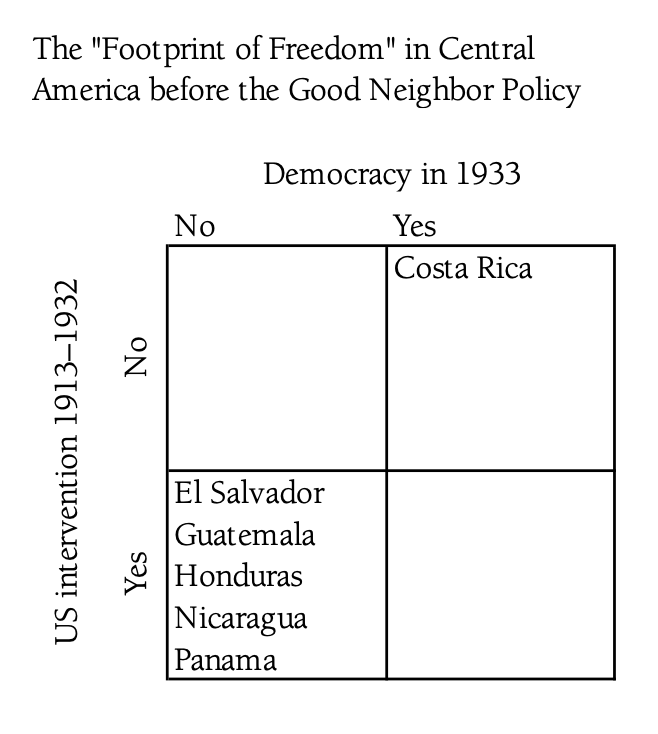
The footprint of freedom

Good neighbors

in the field of world policy I would dedicate this nation to the policy of the good neighbor—the neighbor who resolutely respects himself and, because he does so, respects the rights of others—the neighbor who respects his obligations and respects the sanctity of his agreements in and with a world of neighbors.

Franklin Roosevelt, March 4, 1933

Interdependence

If I read the temper of our people correctly we now realize as we have never realized before our interdependence on each other: that we cannot merely take but we must give as well. . . . it makes possible a leadership which aims at a larger good. This I propose to offer. . . .

Franklin Roosevelt, March 4, 1933

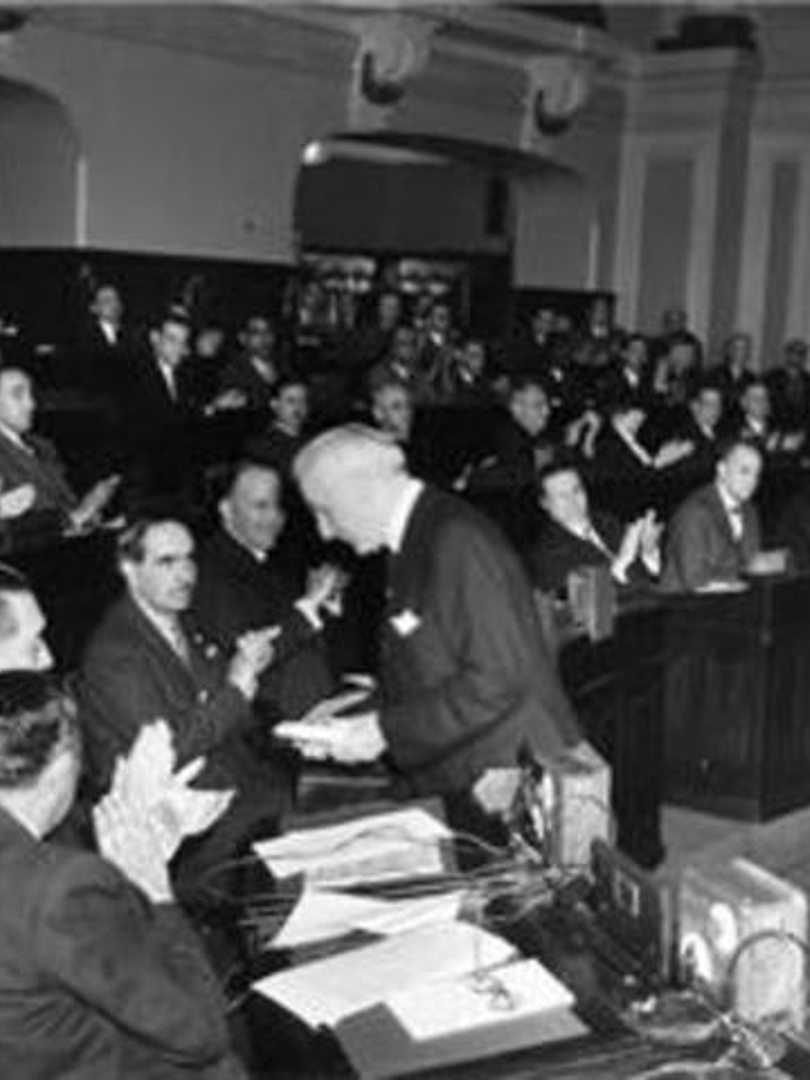
Pan American Conference, 1933

no state has the right to intervene in the internal or external affairs of another. . . . the territory of a state is inviolable and may not be the object of military occupation. . . . even temporarily

Convention on the Rights and Duties of States, December 1933

Modification to Plattism

We have wished to commence negotiations for . . . a modification of the permanent treaty between the United States and Cuba

Franklin Roosevelt, November 1933

Cuban–American Treaty, 1934

US–Panama Treaty, 1936

Goodwill tour, 1934

Who are these good neighbors?

Aid to Latin America

  • Export–Import Bank, 1934

  • UST monetary missions

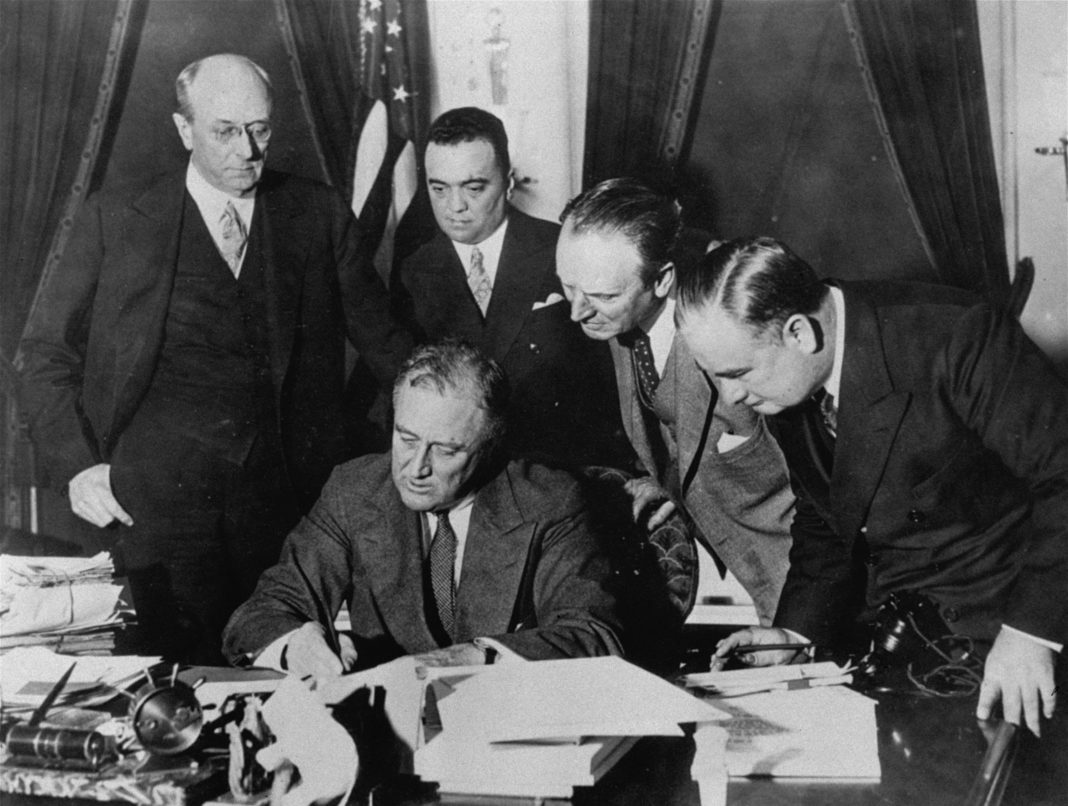
  • FBI

  • military missions

  • Lend-Lease

  • OCIAA (1940)

Saludos Amigos, 1942

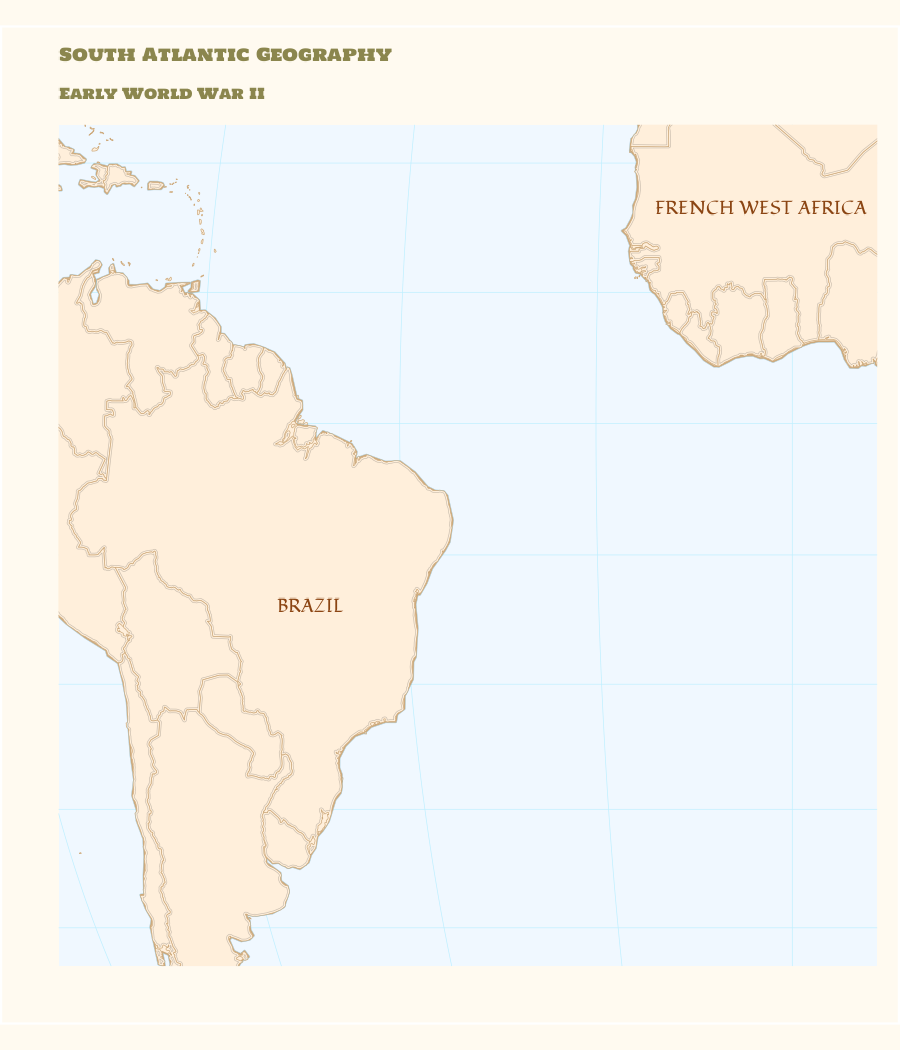
Geography