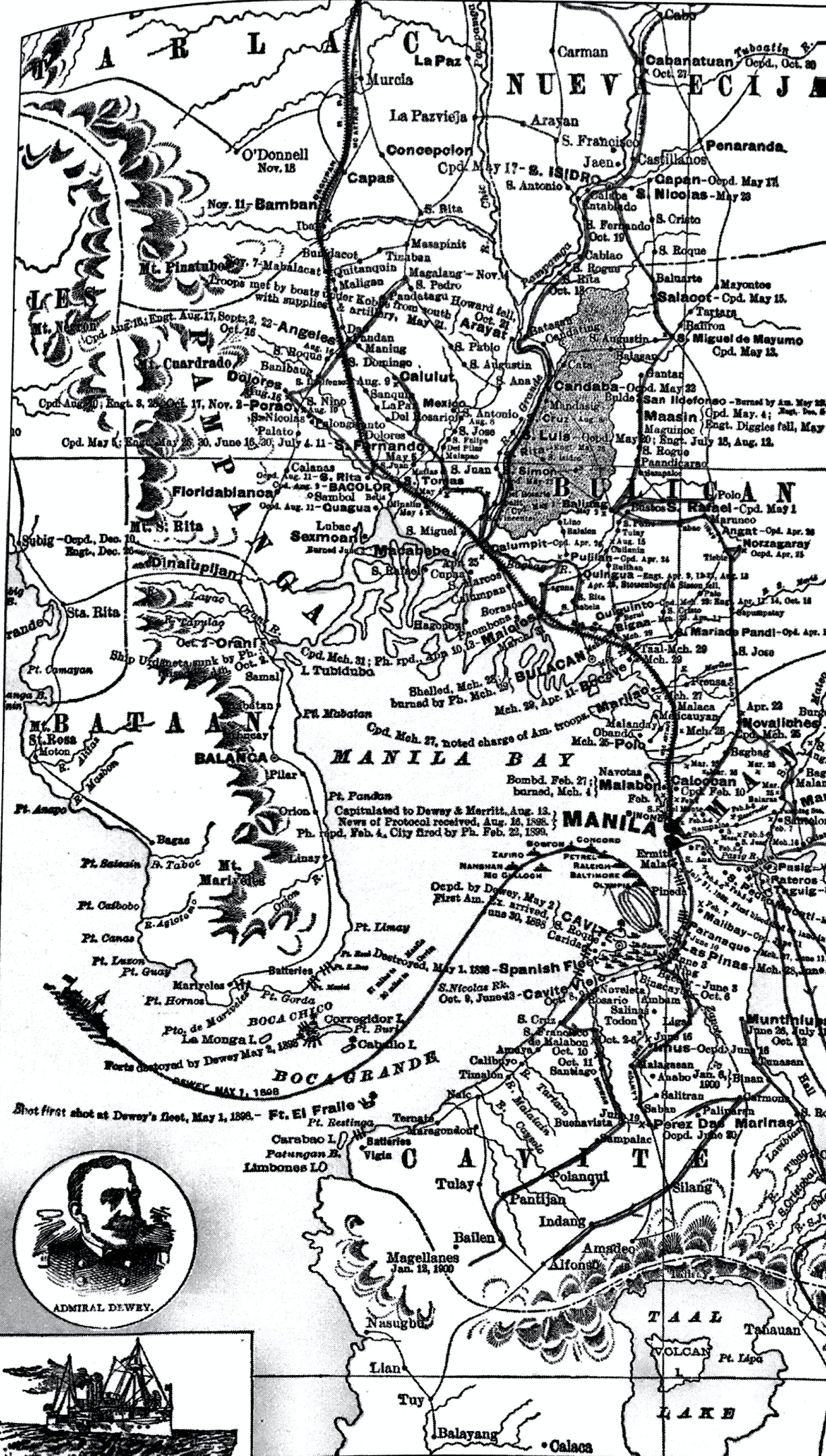
Philippines, 1900–1910

HIS 187

HIS 187
Author

Eric Rauchway

Published

October 2, 2024

Previously

  • Monroe Doctrine
  • Open Door

Indian Wars

Pacific Power

rland_a |>
  ggplot() +
  theme(
    panel.background = element_rect(fill = "aliceblue", color = NA)
  ) +
  geom_sf(fill = "antiquewhite1", color = "burlywood3") +
  geom_sf(data = st_buffer(rland_a, -6000), linewidth = 0.6, fill = NA, color = alpha("burlywood3", 0.4)) +
  geom_sf(data = st_buffer(rland_a, 6000), linewidth = 0.4, fill = NA, color = alpha(c("lightblue"), 0.7)) +
  geom_sf_text(data = us_places, aes(label = name), color = "chocolate4", size = 3) +
  labs(
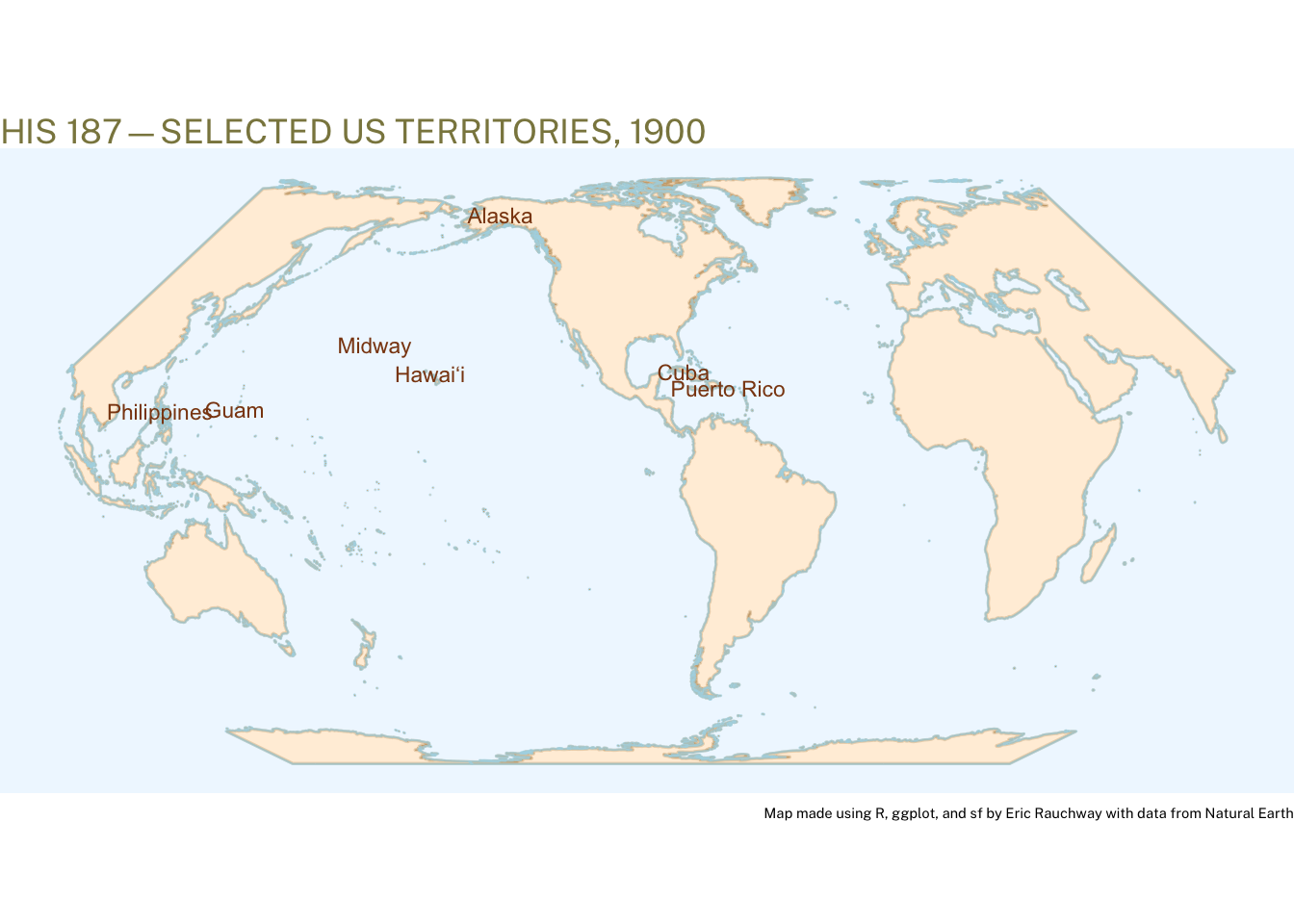
    title = "HIS 187---SELECTED US TERRITORIES, 1900",
    caption = my_cap
  ) -> p
p
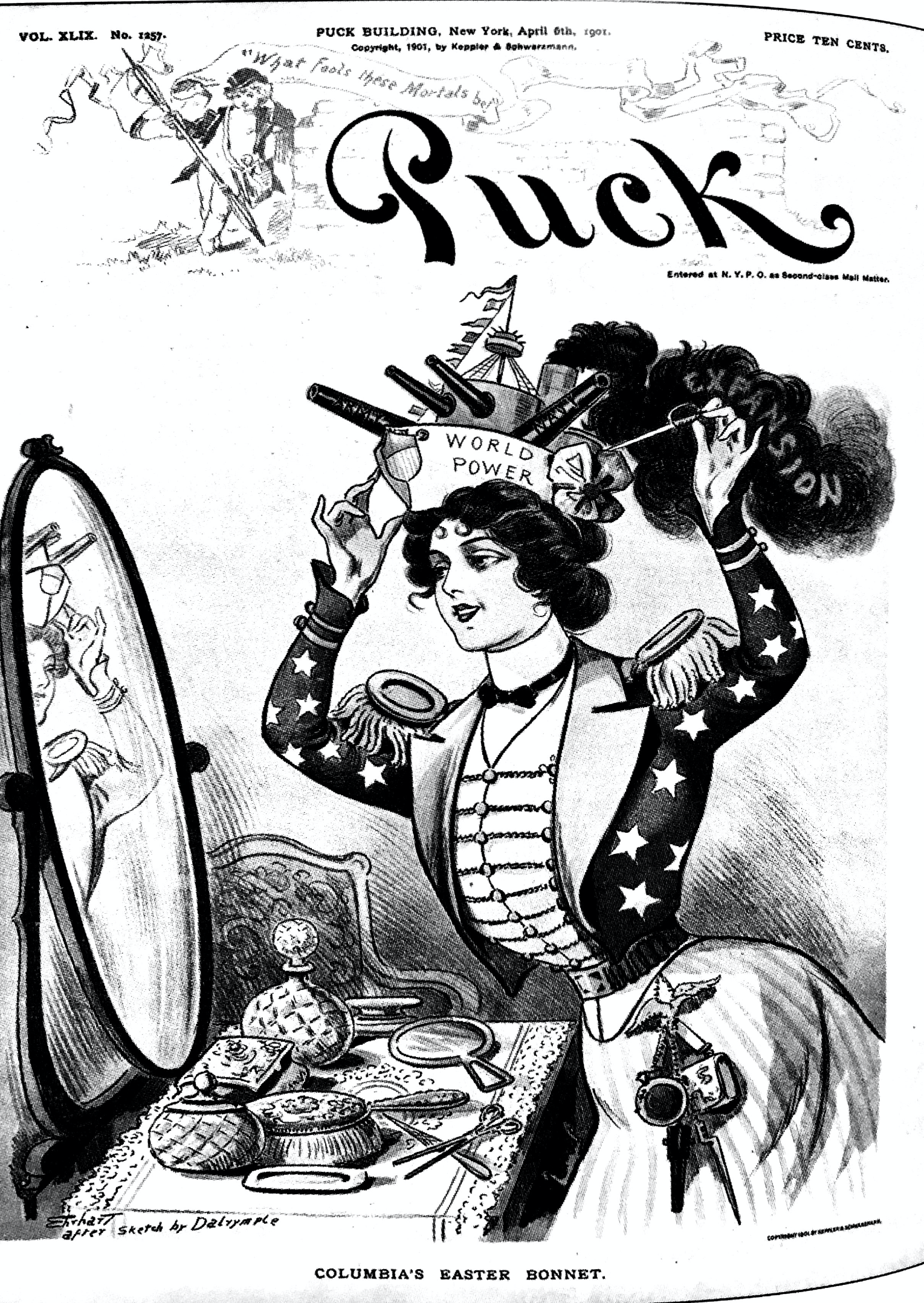
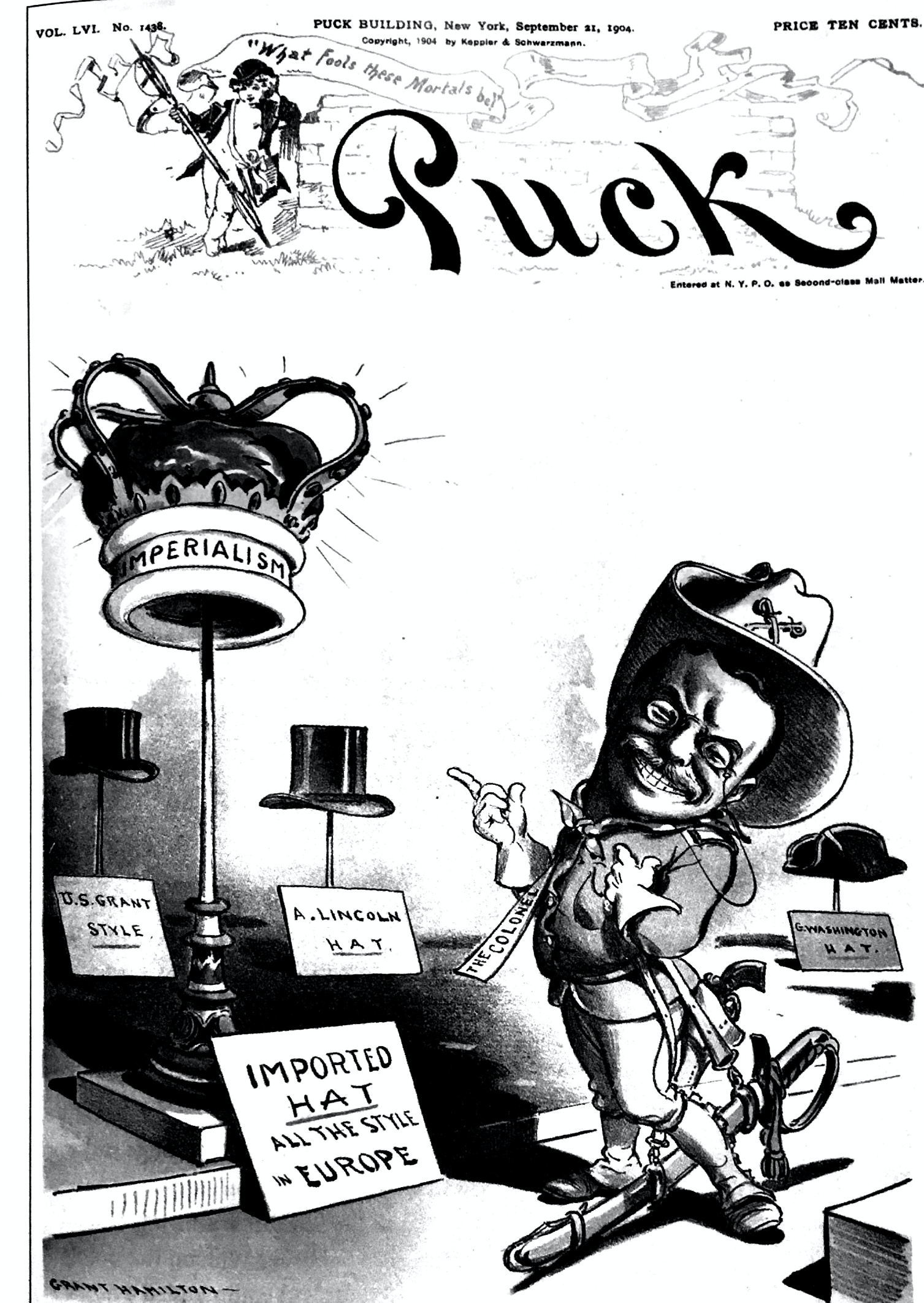
World Power

Manila Bay

Geography of empire

Emilio Aguinaldo

Colonies

Insurgency

Guerrillas

General Orders 100

Not public enemies, and therefore, if captured, are not entitled to the privileges of prisoners of war, but shall be treated summarily as highway robbers or pirates

Water cure

Peace

We have established civil government, so called, but everybody carries arms on all occasions. . . . The civil government is a farce to placate sentiment in the states and could not last a minute without military force.

Major General John Dickman, 1899

Jones Act, 1916

it is, as it always has been, the purpose of the people of the United States to withdraw their sovereignty over the Philippine Islands and to recognize their independence as soon as a stable government can be established therein

US foreign policies, 1910s

  • Monroe Doctrine
  • Open Door
  • Colonialism